
English| EUR
Suggested for you
More currencies
Choose a language
Few coastlines host humpback whales from two hemispheres, but the water off Uvita does exactly that. This page sets out which months carry the whales, how the two migrations differ, and what that means for a visit to Marino Ballena National Park.
Quick answer
The uvita whale watching season splits into two runs: roughly late July through October, when southern humpbacks arrive from Antarctic waters, and roughly late December through early April, when northern humpbacks come down from Alaska and California. August and September are the strongest weeks. Park access runs 07:00–16:00 daily, with a 6 USD conservation fee.
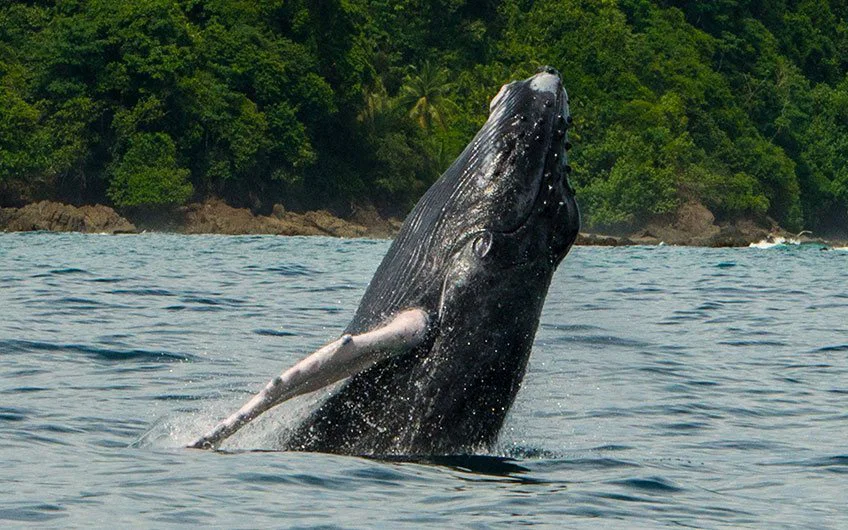
Marino Ballena National Park sits on one of the very few stretches of coast where humpback whales from both the northern and southern hemispheres breed in the same bay, in different months. That double migration is the reason Uvita has two calving windows instead of one, and it is why the answer to "when should I come" depends entirely on which pod a visitor hopes to see. The Costa Ballena coast — literally the whale coast — was named long before the tourism followed. The southern group travels roughly 8,000 kilometres north from feeding grounds near the Antarctic Peninsula, arriving in warm, shallow, predator-poor water to give birth. Their run is the longer and generally the busier of the two. The northern group makes a shorter journey from the Pacific coast of North America during the boreal winter. Both use the same protected marine sectors, and both bring mothers with calves close inshore, which is what makes surface behaviour here so readable from a boat. Alongside the humpbacks, the water holds spotted and bottlenose dolphins, olive ridley and hawksbill turtles, and pantropical spinner pods that often appear on the same outing. The land side of the park shapes the day just as much. Punta Uvita ends in the Whale Tail, a tombolo of sand and rock that emerges only as the tide falls, and the sectors — Uvita, Colonia, Ballena, Piñuela — each have their own access point off the Costanera Sur. Sea conditions in the green months mean mornings are calmer than afternoons, and boats leave from Playa Uvita rather than a marina. Most visitors treat marino ballena whale watching as a half-day commitment and pair it with a walk out along the sandbar. That is the practical use of the uvita whale watching season calendar: pick the month first, then let the tide chart choose the hour. A visit in a shoulder week is not wasted — sightings taper rather than stop — but the peak weeks concentrate the best odds, and they are also the weeks when the September festival crowds arrive.
“Pick the month first, then let the tide chart choose the hour.”
The primary whale watching season in Uvita occurs from August to October, when Antarctic humpback whales migrate to these waters. A secondary, smaller migration of Californian humpback whales takes place from January to March.
Rainy, 25-30°C
This period offers the highest probability of sightings as whales congregate to breed and nurse. Daily excursions are most effective when utilizing the best arrival window of 07:00–10:00.
Dry and warm, 27-32°C
Secondary season for sightings during the migration north. Water conditions are generally calmer during these months.
—
Arriving during the 07:00–10:00 window helps avoid mid-day heat and aligns boat departures with low tide access to the Whale Tail formation.
Verdict: For the highest sighting probability, plan your visit between August and October, arriving between 07:00 and 10:00 to avoid crowds and heat.
Marino Ballena National Park operates on a consistent daily schedule to facilitate access for visitors observing marine life along the coastline. The park remains open every day of the week.
Marino Ballena National Park is located in Uvita, Puntarenas, along the southern Pacific coast of Costa Rica. Most visitors reach the park entrance by traveling via the Costanera Sur Highway (Route 34).
Route 34 (Costanera Sur) to Uvita exit
Tracopa bus line to Uvita station
Local transit to Marino Ballena entrance
Plan your arrival for the 07:00–10:00 window to avoid mid-day heat. This timing is critical to align your visit with low tide, which provides safe walking access to the Whale Tail formation.
Work through these steps in order, starting a few weeks out and finishing the morning you head to Marino Ballena National Park.
Everything you need to know about uvita whale watching season
The peak uvita whale watching season typically runs from late July through October when humpback whales migrate to these warm waters. Observing this natural phenomenon is most rewarding during these months when mother whales nurture their calves. Many visitors find that an organized Uvita boat excursion provides the best opportunity to see these marine giants up close. While some travelers prefer to plan their own schedule, booking your spot for a humpback whale tour early ensures you secure a place during peak migration times. Local guides are experienced in navigating the Marino Ballena National Park waters to locate marine life safely. The park is open from 07:00 to 16:00 every day of the week, including weekends. This schedule allows ample time for visitors to enjoy the coastal scenery and check in for their scheduled activities. Every visitor must pay a 6 USD conservation fee, which is a per person cost valid across all sectors of the national park. This fee supports the ongoing protection of the local marine ecosystem and its diverse inhabitants. We recommend an arrival window between 07:00 and 10:00 to avoid the intense mid-day heat. Arriving early also aligns your visit with low tide, which is necessary to walk out onto the famous Whale Tail sandbar. Although the primary activity during the uvita whale watching season involves boat trips, humpback whales are occasionally visible from the coastline. Scanning the horizon from the beach remains a popular pastime for those spending a relaxing day in the park. Regulations exist to protect the animals, including specific approach distances and speed limits for all vessels within the protected zone. Following these guidelines ensures that the marine environment remains undisturbed for future generations. Respecting the sanctuary status of the park is essential for maintaining the health of the migratory whale populations.